
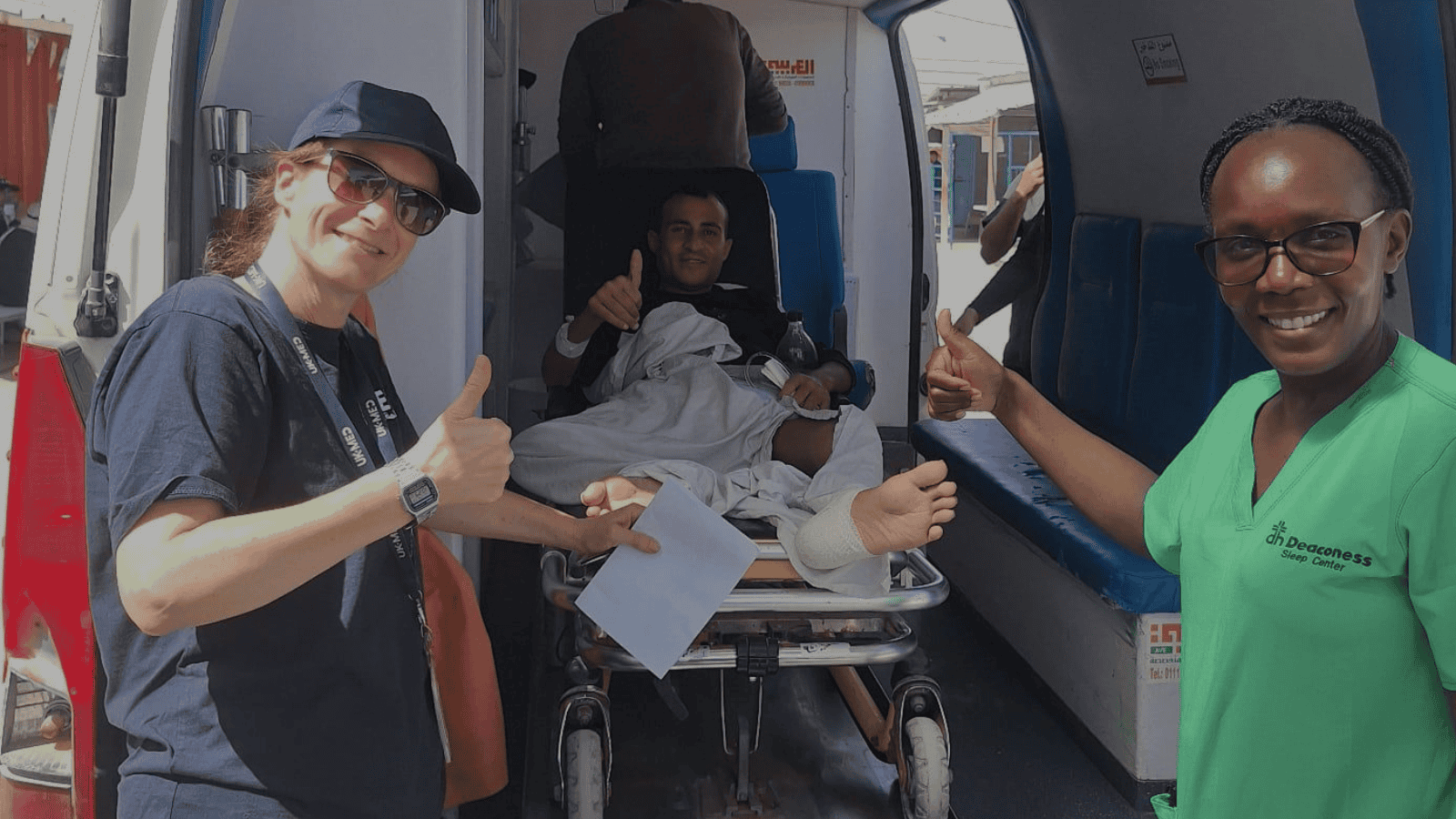
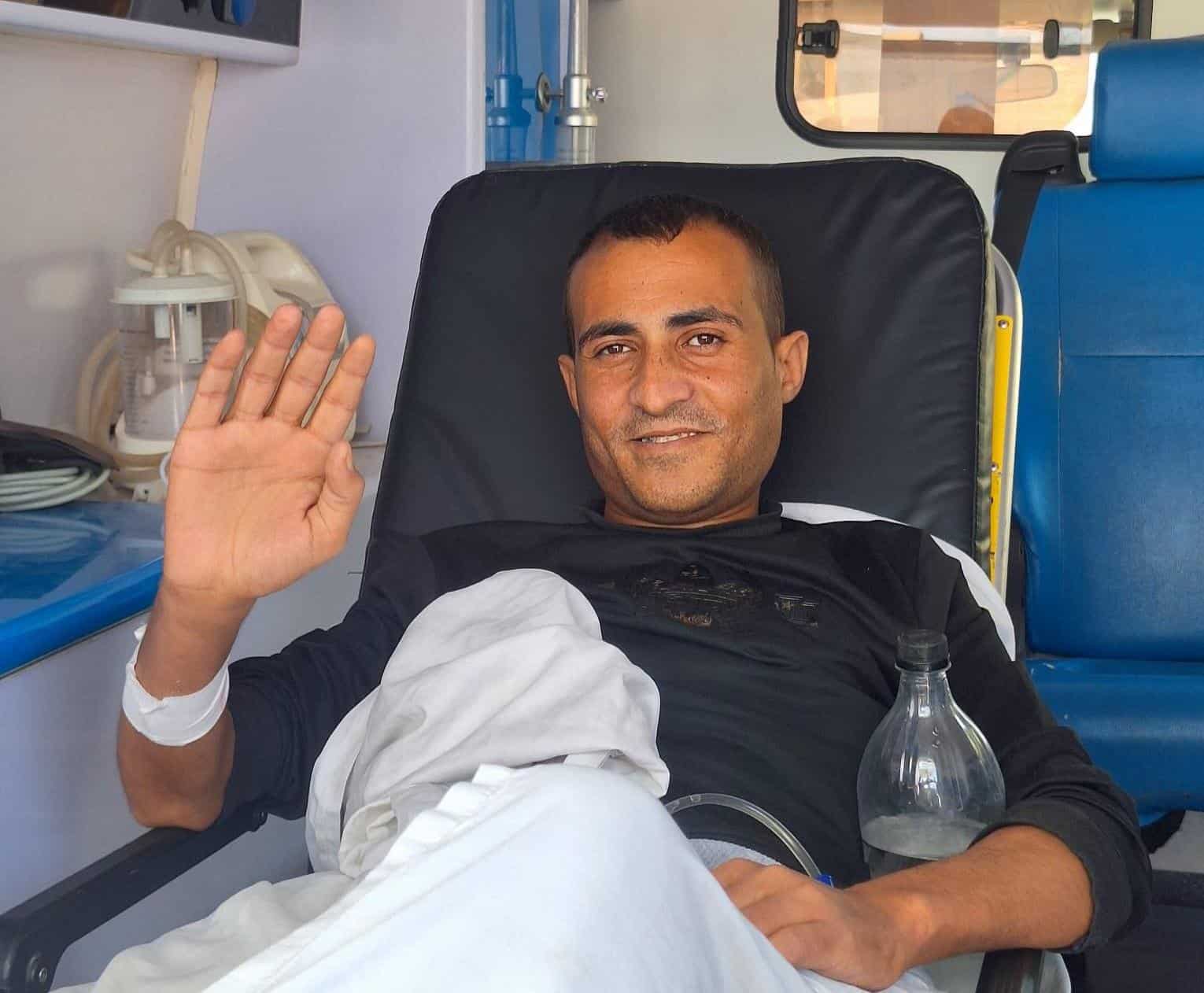
When 27-year-old, Saif Hamdan Al-Akhas, arrived at the UK-Med field hospital in early March 2026, he faced challenges far beyond his physical injuries.
Saif had become paraplegic following an explosive injury. A husband and father of three young daughters, his life had changed suddenly and profoundly. From the moment of his admission, his father remained constantly by his side — helping with daily care, offering comfort, and refusing to let him face recovery alone.
But Saif’s condition was critical.
He was admitted with severe bilateral wounds from bed sores, the result of prolonged immobility and limited access to rehabilitation services. In Gaza, specialised long-term rehabilitation care for life-changing injuries is extremely limited and highly sought after.
In Gaza, rehabilitation care for life-changing injuries is extremely limited and in high demand. In acute care hospitals, limited early rehabilitation and short hospital stays often prevent patients from gaining the skills to recover independence and manage ongoing health challenges. For people like Saif, long-term specialized rehabilitation is essential, yet access remains limited because facilities are often full.
This gap in care posed a serious risk to both his physical recovery, mental health, and his future independence.
A different approach
As UK-Med currently does not offer long-term specialized rehabilitation services, the UK-Med team faced a challenge in knowing how to support Saif’s functional recovery most effectively. Rather than discharging Saif while he waited for a placement in a specialized long-term rehabilitation service, the team made a different decision.
They chose to support his rehabilitation journey within the hospital itself as an inpatient – with multiple healthcare providers working together alongside him and his father to restore his health and function.
Doctors surgically debrided his wounds while nurses delivered intensive daily wound care. Nutrition specialists worked to rebuild his strength, and physiotherapists provided skilled rehabilitation interventions prevent further deterioration and rebuild his functional abilities in daily activities. Over weeks of coordinated care, Saif’s condition began to transform. His wounds healed significantly, his nutritional status improved, and – just as importantly – his outlook began to change.
Rebuilding trust and hope
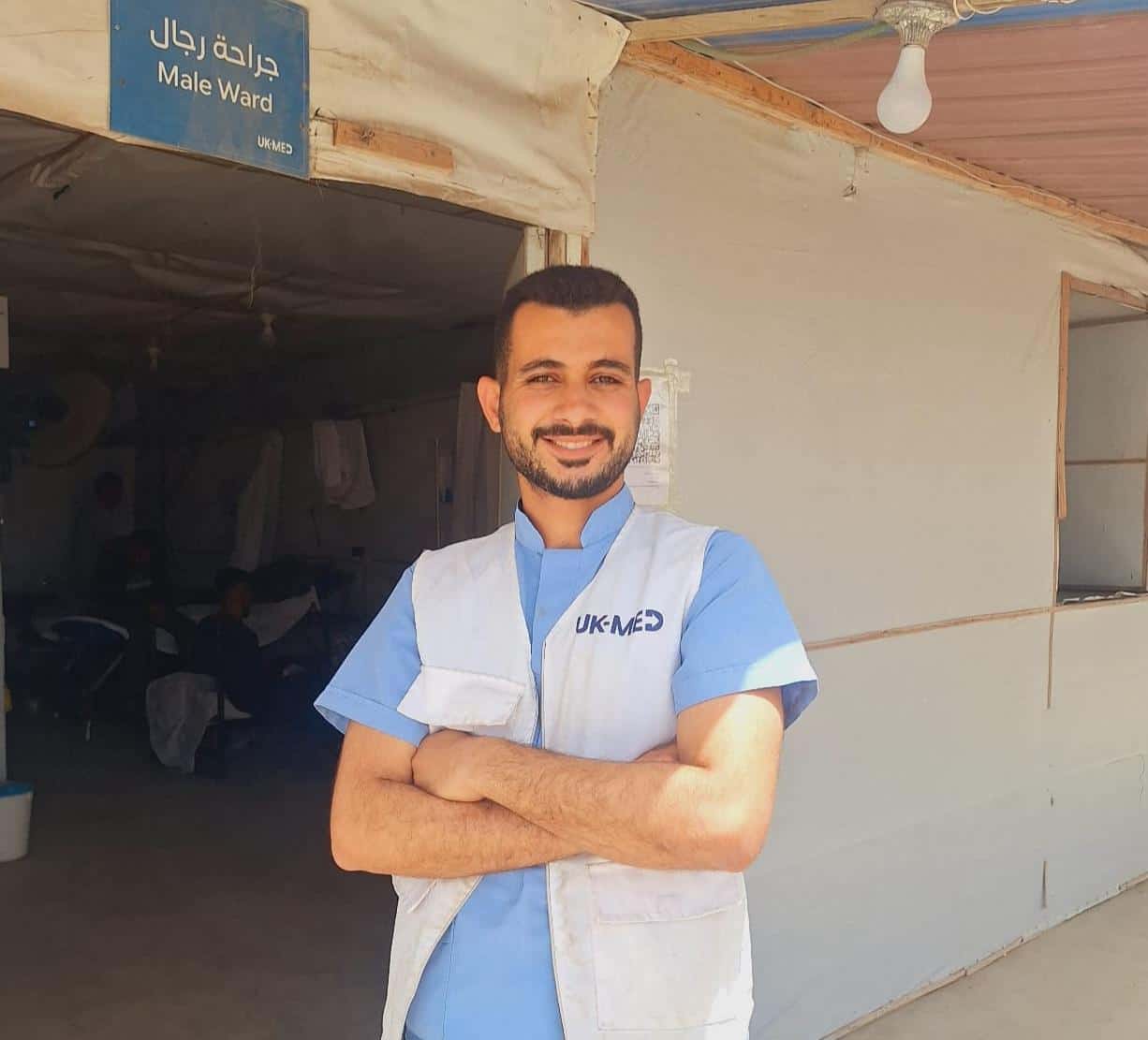
Nurse Basil, who cared for Saif throughout his admission, remembers how vulnerable he was when he first arrived.
“When Saif presented, he was psychologically drained and had suicidal thoughts,” Basil explains. “Medically, he had multiple terrible wounds and was very thin. He was hopeless.”
The team recognised that healing would require more than medical treatment alone.
“We embraced him as one of our family members,” Basil says. “Trust is two-thirds of the treatment journey. We focused on building trust between Saif and the staff. We helped restore his hope.”
Alongside clinical care, staff supported Saif’s psychological recovery — providing psychosocial support, education, and encouragement as he adjusted to life after his injury. Doctors, nurses, and rehabilitation staff worked side by side with Saif, determined to find a long-term solution for his recovery.
The next chapter
While Saif continued treatment, the UK-Med team worked closely with his family to secure specialised rehabilitation care; an opportunity that can be extremely difficult to obtain. Last week, that effort succeeded.
Saif has been accepted to Al Wafa Hospital in Gaza City, where he will continue his rehabilitation journey with specialised long-term service. After three months of intensive treatment and compassionate care, Saif left the ward transformed.
“He left us as a hopeful human being once again,” Basil says.
Saif still has a long rehabilitation journey ahead of him.
But he now moves forward stronger and supported, a father preparing to rebuild his life for the sake of his family and loved ones.
His journey reflects the power of coordinated medical care, rehabilitation, and human connection — and how rebuilding trust can be just as vital as healing wounds.
Ongoing rehab needs in Gaza
Saif’s journey represents a wider challenge facing patients across Gaza today. According to the World Health Organization report on rehabilitation needs in Gaza, an estimated 43,000 people have sustained life-changing injuries since October 2023, including thousands with spinal cord injuries, amputations and severe trauma requiring long-term rehabilitation.
Yet rehabilitation services remain critically constrained: no facility is fully functional, specialist rehabilitation beds are limited, and patients are often discharged early due to overwhelming demand.
Access to essential rehabilitation equipment – including wheelchairs, walking aids, prosthetics and exercise devices – remains severely restricted, leaving thousands waiting for the support needed to rebuild their lives. UK-Med is currently waiting on a shipment to arrive – the first for over a year.
For patients like Saif, timely, early and long-term specialized rehabilitation is not simply recovery; it is the turning point between hopelessness and disempowerment and a future of independence, dignity, and hope.